Showing posts with label reflection. Show all posts

Thursday, 8 March 2012

eco-gazing

What is life, if full of care,
We have no time to stand and stare? (William Henry Davies)

Good question. We should make time. The variable weather at the moment gives plenty of opportunity to experience the widest range of physical conditions. Why should we make time? Standing, staring, gazing and wondering are not passive states. They are interactive. They require one to confront the way things are. They can lead us to an enhanced sense of well-being, that we belong in the natural realm.  In an article entitled "The healing touch of the wild" for Positive News psychotherapist Hetti Dysch concludes with the sentence 'Helping us to reconnect individually and culturally,wilderness therapy invites us to get to know our landscape and inspires communities to be guided by the blueprint of sustainability and interdependence that nature reveals.' For me, it's a way of triangulating current situations.

This morning I was watching and sensing the interaction of wind and flow on the river water. This was time, the river and my presence creating a moment. Having learnt and practised meditation techniques intermittently, I knew that I could change my level of consciousness. Apparent emptiness could be filled if I allowed the river in. With concentration, I can hold on to what I consider to be a deeper level of consciousness for a while, so turned my attention to the trunk of a tree.
As so often before, once I had started to draw, I became part of what I was observing. The drawing is only an exercise in observation; an aid to understanding. And although I don't set-out to create a drawing that becomes something that might have its own value as an end-product, the desire to create something beautiful does, nevertheless, play a part. By something beautiful, I think I mean something that attempts to communicate or express some human emotion. I was drawn to draw this particular tree trunk by some very raw sensibilities, such as the raw sexual attraction of an orifice and of the released binding from a wire fence. Making the drawing was so very different from taking a photograph and later manipulating it, as I had done two days' previously:

I took this image on my way to the top of Noonstones Hill, from where I could experience the effects of the weather at different altitudes. Also the image below.
From the summit I took this image of Yad Moss. I think it speaks for itself. I was not inclined to interfere with it in any way.
The point I'm trying to make is that meanings and values seem to come to the surface just by gazing. I guess it could be at anything - or anyone - that you love. It seems to reinforce that love. Just as lovers gaze at each other, just as a mother gazes at her baby and the baby gazes back. They and we are a part of each other, and sense a fullness by our belonging. A love of the fullness of life and the way that we are part of that fullness may help us to break our addiction to consumerism. If that's so, maybe we should do it more? And if that's so, I'll give the activity a name. I'll call it eco-gazing.

Friday, 17 June 2011

macro to micro

The Orion Nebula, taken by Hubble, NASA/ESA
Whether gazing millions of light-years into deep space, or staring at a plant just a few inches away, you can only be struck by the beauty of form as it flows around and fills space.
Thistle at my feet
An alluring aspect of space-gazing is the language. The words are more than utilitarian descriptors. They rely as much on references to classical cultures as they do on technical classifications. I've marvelled at Hubble's 'top twenty' photographs and their captions, extracting some of the phrases used and re-ordered them into a kind of poem. It is reminiscent of early Pink Floyd lyrics.
Majesti


Hubble has peered into the Sagittarius Star Cloud
Majesti appears as a whirlpool
Young stars reside in the curving spiral arms,
the formation of supermassive black holes.

'The Mice': a pair of galaxies
engaged in a celestial dance of cat and mouse.
A dense swarm of stars, patches of dust,
and a bright star cluster near the nucleus of the galaxy.

Saturn's four moons pass across its face.
The white icy moons Enceladus and Dione,
the large orange moon Titan, and icy Mimas.
Enceladus and Dione are preceded by their own shadows.

A Seyfert 2 – a galaxy
probably powered by a black hole at its core.
The thick ring around the yellow core
is an area of active starbirth.

In the Orion Nebula,
more than 3,000 stars reside
in a dramatic dust-and-gas landscape
- plateaux, mountains, and valleys.

A picture-book of star formation,
from the massive, young stars shaping the nebula
to the pillars of dense gas
that may be the homes of budding stars

A Sun-like star is ending its life,
casting off its outer layers of gas,
forming a cocoon around its remaining core.
A white dwarf is in the centre.

Monday, 3 January 2011

frozen out

snow remnants
The ice-jaws of the season have had an almost relentless grip since the end of November, pinning the earth down in sub-zero temperatures. Occasionally, a playful release and the surface melts. Then the jaws shift position for a few hours before clamping shut again. The crests of snow and the troughs of brief melting have broken the banks of the shelter. It's reclaiming itself to itself. Nature to nature. It's left me to retreat to the warmth of our house, home and hearth, firelight, family and friends.  Culture to culture. Human relationships become important again.  We talk of our exploits and plot the future. We make-up stories as we share and reflect on the myths, legends and histories in our background.
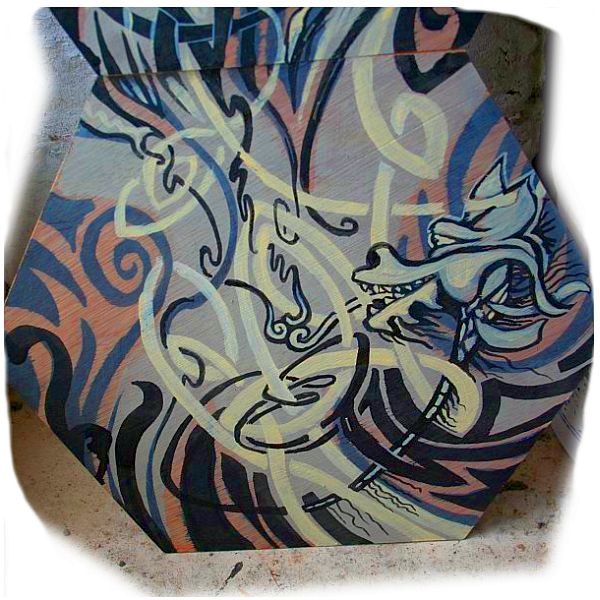
Dragonade: Rolling Minstrels

In the next three months I shall use the images and material that I've harvested from the site over the year to create, assemble and curate an exposition for display and/or publication.
Supine Earth; Rolling Minstrels

Monday, 23 August 2010

from the top

Above the gill is an area marked on the map as Windy Brow. It's an apt name. The brow forms the border of a rough and disorganised plateau which spills from the northern slopes of Burnhope Seat, where wind and water scourge the rock, peat and plantlife.  Often, the horizon between earth and sky is as indistinct as the difference between the surface and the peaty shale and hard rock of its underground world.
As you approach the top of the gill, you get a sense that the elements are becoming more resolved; that light, water and earth begin to take on more distict forms.
There's a kind of triumph when water gushes out again from a dark channel in the earth, glistening and dancing over rocks and between tree limbs. The water washes out minerals and fertilises the surrounding sodden ground, stimulating fresh new growth and attracting insects, small reptiles and birds.

The act of reflection since my last trip to the shelter has been essential in the completion of these three paintings.